Towards a Taxpayers’ Rights Compliant Cross-Border Recovery of Tax Sanctions
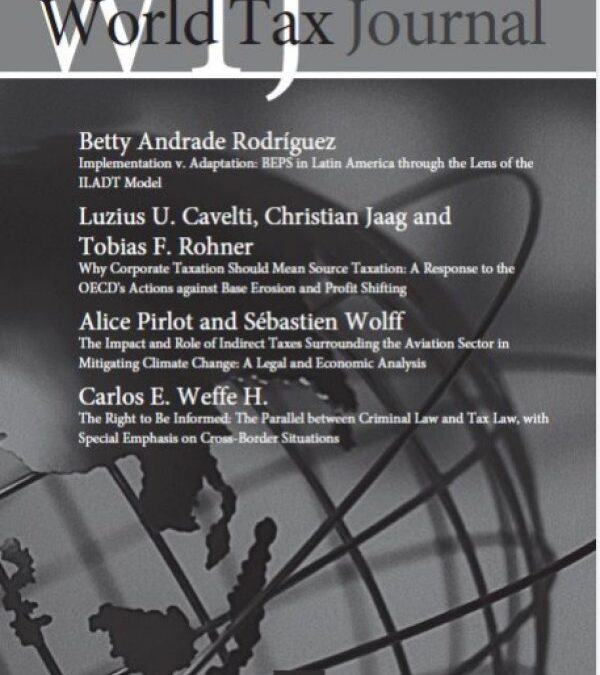
World Tax Journal Vol. 15 No. 1 | IBFD, 2023
Co-authored with Robert Attard
A faltering procedure for cross-border enforcement of sanctions under the Council Directive 2010/24/EU of 16 March 2010 concerning mutual assistance for the recovery of claims relating to taxes, duties and other measures (TRD), has contributed to a degree in uncertainty and a wavering protection of taxpayers’ rights. Against this background, the article proposes taxpayers’ rights (due process, proportionality, non bis in idem) as minimum standards for the applicability of the TRD in the area of tax sanctions. In this regard, the article revisits the scope of the TRD, and advocates for a standardization of the definition of sanctions to whose recovery the TRD is applicable (namely, amounts imposed for deterrent purposes, definitively imposed after due process of law and respecting minimum parameters of proportionality). These minimum requirements should be regarded as essential to the cross-border recovery of tax sanctions, as they stem from EU law as part of its fundamental principles. Hence, due process, proportionality and non bis in idem standards should be fully enforceable by the requested state, without prejudice to the Member States’ broad discretion in defining and applying tax sanctions, providing taxpayers with adequate protection and further certainty.
Download